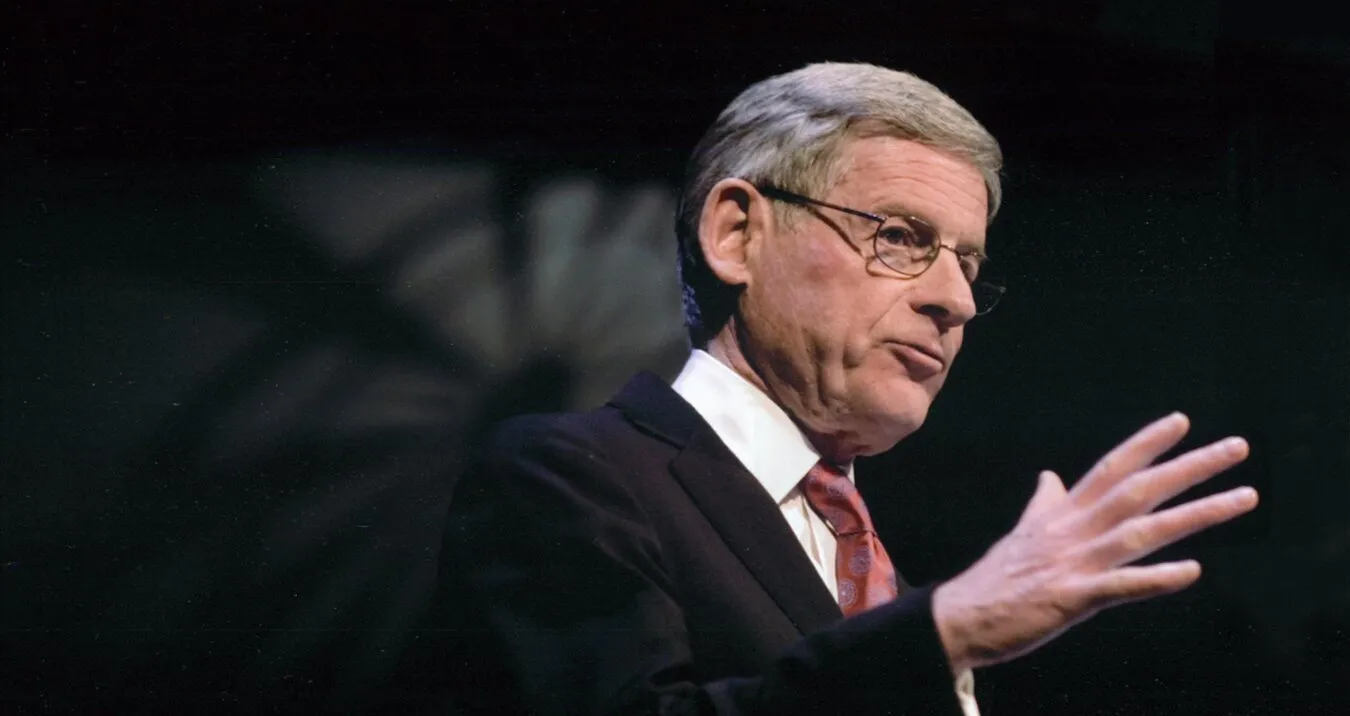
Harvey C.Mansfield
b. 1932
Major Works
View all books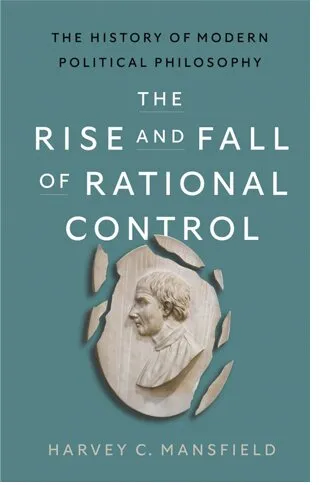
2026
The Rise and Fall of Rational Control
Examines modernity's pursuit and limitations of rational political control.
2026
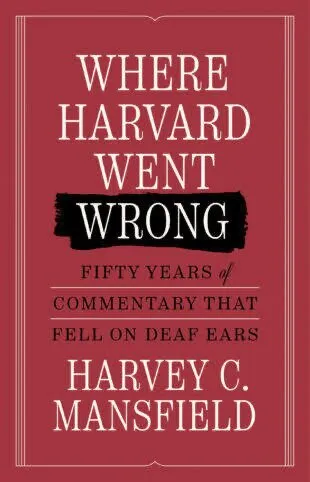
Where Harvard Went Wrong
Critiques how ideology transformed Harvard and undermined academic freedom.
2023
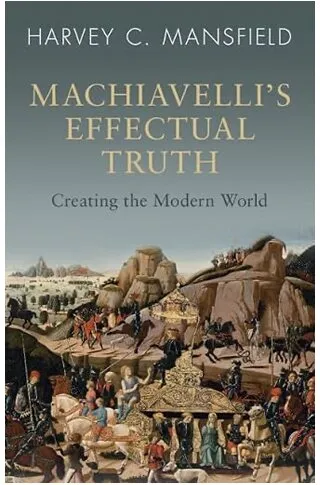
Machiavelli's Effectual Truth
Explores Machiavelli's revolutionary understanding of power and political reality.
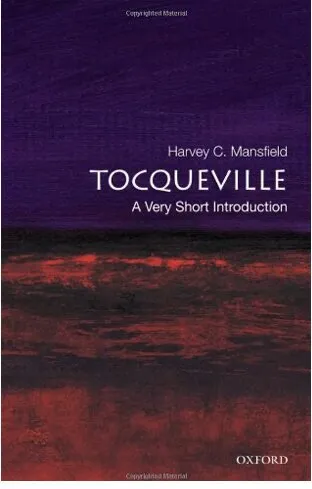
2010
Tocqueville
Explores Tocqueville's insights on democracy, equality, liberty, and ambition.
Featured Lecture Course
View all lecture courses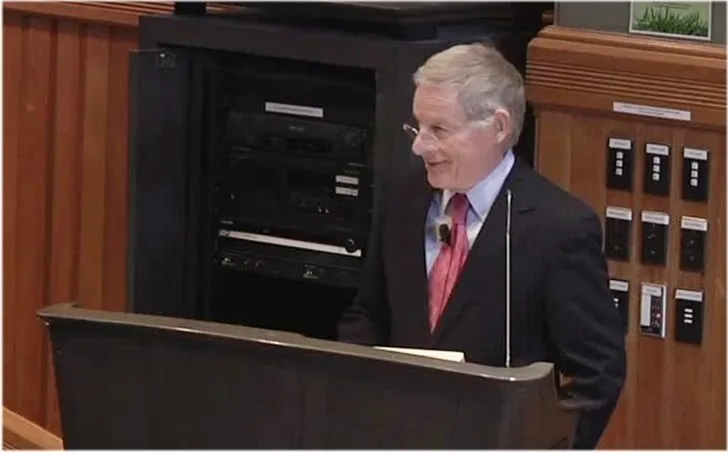
The History of Modern Political Philosophy
Political philosophy from Machiavelli to Nietzsche, with attention to the rise and complex history of the idea of modernity.
Featured Essays
- “What Use Is Political Philosophy?”
— The New Criterion, June 2026 - “Harvard vs. Trump Is the Result of a Profound Error”
— Washington Post, May 27, 2026 - “The Wisdom of the Federalist”
— New Criterion, February 2011 - “How to Understand Politics: What the Humanities Can Say to Science”
— Jefferson Lecture in the Humanities, 2007 - “Liberal Democracy as a Mixed Regime”
— The Alternative, June 1975
Lecture Courses on Video
The History of Modern Political Philosophy
Political philosophy from Machiavelli to Nietzsche, with attention to the rise and complex history of the idea of modernity.
The History of Political Philosophy: Ancient and Medieval
Classical and medieval political philosophy, from Plato to Thomas Aquinas, with special attention to the question of natural right.
Democracy and Inequality
This course is devoted to Plato’s Republic, Hobbes’ Leviathan, and Tocqueville’s Democracy in America: three beautiful books presenting the best argument for aristocracy, the most realistic basis for equality, and the best analysis of democracy.
Introduction
Harvey C. Mansfield is the William R. Kenan, Jr., Professor of Government at Harvard University. Mansfield’s many contributions to the study of political philosophy include translations of Machiavelli and Tocqueville, nine books and extensive scholarship on a broad range of subjects, and commentary on contemporary politics.
History of Political Philosophy
In A Student’s Guide to Political Philosophy (2001), Mansfield provides a concise outline of the major philosophers and topics in political philosophy from Socrates to Heidegger. In addition to summarizing the main themes prevalent throughout the history of political thought, Mansfield also discusses the unique character of this tradition. In his words, “the history of political philosophy is required for understanding its substance” because “the great political philosophers read the works of their predecessors and commented on them.” Mansfield argues, on the one hand, that modern political science, which falsely claims to be above political philosophy, nevertheless cannot supersede it because modern science itself arose out of political philosophy. On the other hand, the arguments of political philosophers can transcend their historical circumstances and speak to readers in all times. As such, it is the reader’s task to study the great works of political philosophy with care.
Read more of the introductionBiography
Harvey C. Mansfield is the William R. Kenan, Jr., Professor of Government at Harvard University. He was chairman of the Government Department from 1973 to 1977, has held Guggenheim and NEH Fellowships, and has been a Fellow at the National Humanities Center. He won the Joseph R. Levenson Award for his teaching at Harvard, received the Sidney Hook Memorial Award from the National Association of Scholars, and in 2004 accepted a National Humanities Medal from the President. In 2007, he delivered the National Endowment for the Humanities’ Jefferson Lecture. He has hardly left Harvard since his first arrival in 1949, and has been on the faculty since 1962.
For more than forty years, Harvey Mansfield has been writing and teaching about political philosophy. His commentary “demonstrates the virtues that should guide scholars of the humanities,” writes Mark Blitz, a former student. Blitz explains those virtues as “patient exploration of the intention of a superior author, attention to other scholars and generosity to trailblazing teachers, brilliance and wit, and an eye toward what can improve us here and now.”
Mansfield examines both contemporary politics and their historical origins. His fourteen books delve into the words of past thinkers such as Edmund…
Read more of the biography
Featured Commentary
by John McMillan, City Journal, June 2026
by Peter Berkowitz, RealClearPolitics, May 2026
by Daniel Mahoney, Law & Liberty, April 2026
by Mark Blitz, Law & Liberty, October 2015
Eds. Krause/McGrail, Current